Shell Shock

A shell is something beautiful, signifying containment, the protective hard outer layer, yet now empty.

Thus is the novel Shell by Kristina Olsson… beautiful, containing history, events, the 1960s in Australia (1960-1966), the building of the Sydney Opera House, conscription of young men sent to Vietnam, protest, sabotage and families torn apart. P1300633 Shell Front
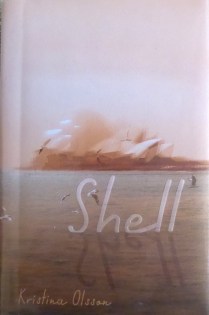
Shell has flashing moments of insight, of great beauty that resonates, and brings the reader closer to the main character, Pearl Keogh. Her pain at separation from her brothers, who ran away from an orphanage where they were sent after the death of their mother, goes on and on. She’s lost track of her brothers and searches for them, fearful they’ll be conscripted and sent to Vietnam.

When she eventually finds her two younger brothers,  her pain somehow dissipates. They’ve changed. Their values are far apart and irreconcilable from her own. How does Pearl keep going having achieved the goal of finding her brothers, yet realizing that they are farther apart from her than ever? Her calm acceptance of the profound chasm that has opened up between them seems  implausible.

Pearl has an on and off relationship with Axel Lindquist, a Swedish artist working on glass sculpture for the Sydney Opera House. Their time together, their lovemaking, seems random and unfulfilled. Some of the most powerful writing in Shell is of soliloquys when each of them is delving into the loss, pain, guilt and shame of their individual lives.

Each character seems to live inside her or his own shell. They don’t quite make contact with others, P1300635 Shell back .jpgincluding family members. Letters between Axel and his mother, who is in Sweden, does portray some warmth in their relationship, but it is at a distance.
Considerable time is taken up in the book regarding the process of glassmaking, which could be a metaphor for their lives and the interrupted process of the construction of the Sydney Opera House.

Shell is a book to admire, to turn over in your mind as you would a beautiful shell in your hand and yet wonder what is missing.

A beautifully written book that somehow disappoints.


Compulsion

I never think of

my  city

my country

As if I own it

I think

I’m here, now

When asked

 Where are you from?

I answer

wherever I’m currently living

– Narrabundah (Australia)

– Nairobi (Kenya)

 No, but where are you really from?

As if that will “place” me

confine me

describe me

 Do I detect a U.S. accent?

 Where are you from in the U.S.?

My (unspoken) reply:

 How much time do you have?

 Do you really want to know my life story?

 All the places I’ve lived and worked

 Is this my identity?

The Hate Race

The Hate Race

By Maxine Beneba Clarke

The Hate Race


Contrary to the title of the book,

a story full of love

for family

for friends

for acceptance in the face of hate.


Does hate exist permanently?

Is it cast in stone for ever more?

Even a stone can be worn down

over time

with the right conditions.


Reading The Hate Race

the reader becomes more aware

more in tune

with people around them.

Aware that words do hurt

chip chip chipping away

at a person’s sense of self until

someone is left shattered

bits and pieces in a pile.

We must open up our hearts and minds

accept ourselves and others

and win

The Hate Race.


Have you read books that gave you insight into another person’s suffering?


Do you think books can help create empathy?

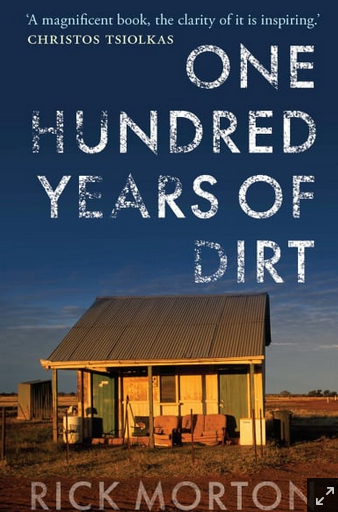
Brutal honesty: One Hundred Years of Dirt

Response after reading: One Hundred Years of Dirt By Rick Morton

I am not born in Australia.

I am not gay.

I am not male.

I am not a journo.

I did not grow up on a property in western Queensland, Australia.

I have mild anxiety attacks but usually keep going.

When depressed, I get into bed and cry.

I am trying to renew my extended family through writing a novel about my father.

I am trying to be a steadfast supportive mother.


My reaction to this book?

No words.

This book is so courageous.

How can anyone write about his inner self with such honesty and power?


100 Years of DirtI heard something about One Hundred Years of Dirt on ABC Radio National. I don’t remember what. I picked up a copy at my public library. I put it on my stack of to-be-read books on the floor in a corner of my bedroom.
Whoops. An email reminder from the public library. I had only four days to read One Hundred Years of Dirt. I read it in three. The power of this book with all its exposed pain, lifted me out of a depression and back into writing. Thanks Rick.

Spoiler alert:

This book is NOT about living on a property in Western Queensland.

Dear Reader,

What books have had a powerful emotional impact on you?

Have you ever been amazed that someone could write with brutal honesty?


Unseen people

At the Gallery

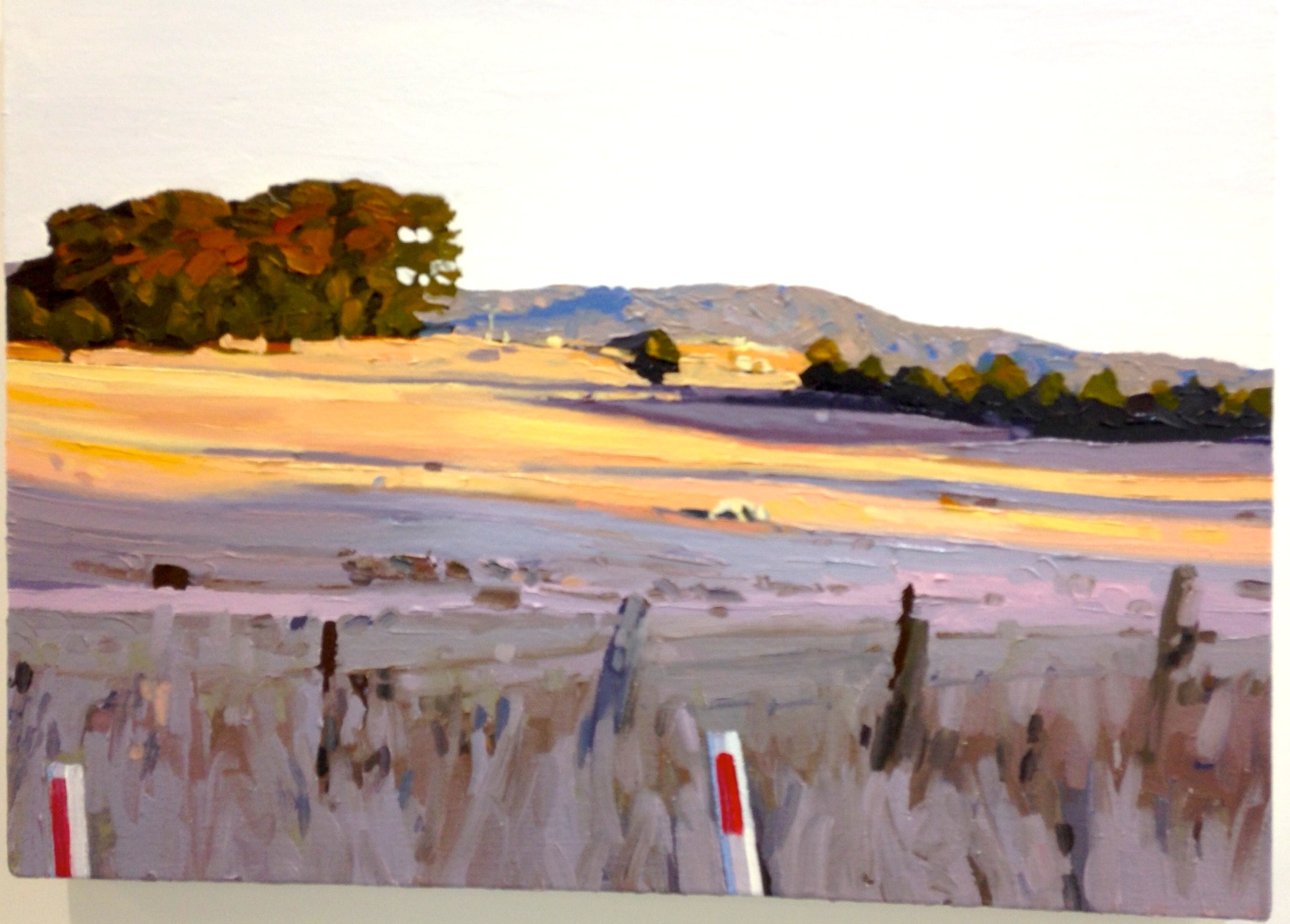
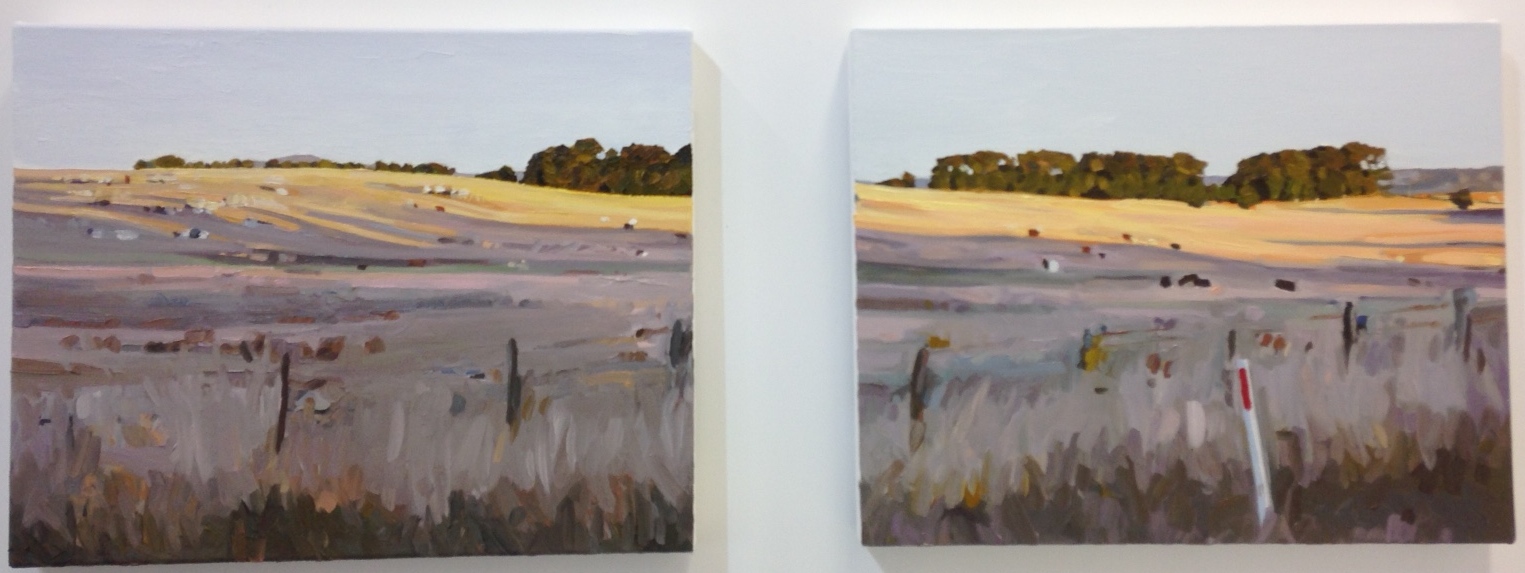
Paintings by Kate Stevens: Scenes from an Afternoon

Gorham Art Centre Canberra, Australia

IMG_3410.JPG Landscape

Sweeping landscapes

on small canvases

Heavy oil paint

applied in thick daubs

Foreground mauve

purplish colour

Distance implied by

yellow fields

massed green trees

Big sky

light light blue


Just when I’m getting bored

seeing similar landscapes

the same colours

over and over again

I step away

and am captured


Australian pastoral landscapes

not my favourite

and yet the

sweep

space

colours of

rippling land

low rising hills

attract


Quietly appealing

limited colour palette

mauve

yellow

dark grey green

light blue sky

hint of fencing

daubs of black

cows with white face

Inhabited land

controlled by unseen people

IMG_3405 landscape.JPG

History Through Fiction: The Making of Martin Sparrow (part two)

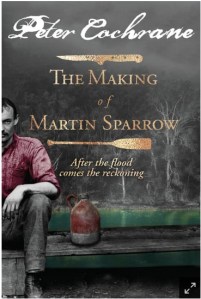
I am continuing with my response to the novel The Making of Martin Sparrow and learning about history through fiction. Reading the book, I entered into the world of settlers on the Hawkesbury River in southeastern Australia at the time of the flood of 1806.

Colonies are built on dreams, but some dreams threaten ruin Martin Sparrow Cover

This was the single sentence on the first page of The Making of Martin Sparrow after the title page.

Women were only minor characters in The Making of Martin Sparrow. Evil and not so evil men dominated. Many settler men met their end through the harsh environment – wild boars, wild rivers, a prick from a platypus, or disease. Others through retribution by indigenous men, who selectively killed settlers who had massacred their people.

The ending of The Making of Martin Sparrow didn’t quite satisfy. It was a little too neat. Yet the book had to end sometime. I had to leave that time and place and return to the present day.

Here are a few samples of the beauty of the writing in The Making of Martin Sparrow about a harsh violent history of the forcible settling of Australia by convicts and their keepers.

It was almost sunset and the clouds to the north sat flat, as if on a straight edge, and they were lit bright pink on the underside and the sky beneath was the palest petal blue. (p. 297)

I’ve seen those clouds and that sky.

Or they might not find them at all and instead find Dan’s musket wedged in a tree, draped in the deathly grey of flood-borne shrubbery, the floodwaters a master of random arrangement. (p. 404)

I’ve seen shrubs, trees, stranded, washed up along the banks by rising rivers after they’ve subsided.

Just one thing can shape your whole life. (p. 423) Quiet insights in the dialogue, especially from the character Cuff, are sprinkled throughout the book. Somehow they become believable, although the reader may doubt the character’s ability to reflect.

The author, historian Peter Cochrane comments in the Afterword

The Making of Martin Sparrow is a work of fiction in which the documented past provides points of departure into an imagined world. (p. 447)

Can the reader find historical truth through fiction?

Are novels a more powerful and accessible way to learn about history and other cultures?

What do you think?

Your comments are most welcome.  Thank you.


Harshly Boring: The Making of Martin Sparrow

My last post was about learning history through novels. Here’s my response to a novel by an Australian historian, Peter Cochrane.

I heard a review of The Making of Martin Sparrow, on ABC Radio National here in Australia. I put in a request online at the ACT (Australian Capital Territory) public library.

That’s how I came to having a copy of The Making of Martin Sparrow. I was already reading several other books so I put it on top of a pile. A few days later, I received a reminder from the library by email. The book was due in three days!

I read The Making of Martin Sparrow as an emotional journey. When the first page had a long list of characters, I was skeptical.  I skipped over that page and started reading. Tentatively. I kept on, although the main character, Martin Sparrow, was not particularly likeable.

At one point I thought the story was harshly boring and was ready to put it aside. The writing, the odd turn of phrase, the originality kept me going, even when the narrative seemed tedious.

My perseverance was rewarded. I entered into the world of settlers on the Hawkesbury River in southeastern Australia at the time of the flood of 1806. A world dominated by male violence, drinking, whoring – not topics that usually hold my interest. There was something more shining through… patches of sunlight in a forbidding, very dark sky.

My emotional journey through The Making of Martin Sparrow continues in the next blog.

Have you read this book

What are your reactions?