Abandoned, Eastern Oklahoma State Mental Hospital

I’d come to the MidWest, USA to research events in my father’s life for the novel I was writing, Tracking the Human: nobody’s a long time. I found very disturbing information while searching online at the public library in Lawrence Kansas. In 1934, my great aunt Jessie Hutchison went to court in Tulsa, Oklahoma to have my father, W. Lon Hutchison committed to the Eastern Oklahoma State Mental Hospital in Vinita.

The documents Aunt Jessie submitted to have him committed included a letter from the warden at the Federal Medical Center for Defective Delinquents in Springfield, Missouri. After being transferred from the Federal Penitentiary in Leavenworth, Kansas, my father had served the remainder of his prison sentence for narcotics at the Medical Center in Springfield.

Court document Tulsa Oklahoma certifying W. Lon Hutchison as insane

The letter from the warden was as follows: “Lon is suffering from hallucinations, believes he’s been to heaven and back and is ordained to save mankind. It is necessary to feed him with a tube because he thinks all food is unclean and from the devil, except for milk. It will be necessary for him to go to a mental hospital for further treatment until he can be placed on his own. “

I had heard stories from my mother of my father being in prison for narcotics. That didn’t upset me. When I read the warden’s letter about my father’s delusions and the fact that his own aunt had him committed to the Eastern Oklahoma State Mental Hospital, I broke down completely.

I was struck down by the terrible pain of being rejected by his family and sent to the mental hospital -a place to dump the indigent, the poor, the aged, the neglected, the unwanted. Most people would never get out. I sat in a comfortable chair in the Lawrence Kansas Public Library and cried. I was shaking all over. No one in the library paid any attention.

The visit to the public library in Lawrence, Kansas was the lowest point in my search for information about my father. How could he have survived? How did he manage to get out of the mental hospital? How much did he have to keep hidden in later life from everyone, including his wife, my mother?

Postcard of Eastern Oklahoma State Mental     Hospital, Vinita, Oklahoma

I left the library and walked up and down in the park, trying to pull myself together to drive back to my friends’ house. I wasn’t sure I could remember the way down the country roads, which had no names or signs. I made it back but until the next day, I couldn’t tell my friends what I had found.

On the road: Back in the USA

In 2016, inspired by the ending of the film Big Fish to tell my father’s story so he could be immortal, I decided to research the life of my father, W. Lon Hutchison. I started writing a novel Tracking the Human; nobody’s a long time, based on events in his life. To carry out the research, I had to return to the Mid West USA, from Canberra, Australia, where I was living.

With my mother’s death in 2011 our family “home base” in Kansas City had been sold and reimagined by the new owners, going from being bright pumpkin orange trimmed in turquoise to being repainted all white with a picket fence.

Without my mom’s house, whose screened-in front porch had been a meeting place for the neighborhood, I had to find somewhere to stay. I wanted to be with people I knew and felt comfortable with. I was fearful that this would be a challenging project, quite different from past research that I had done for university assignments and educational programs. I anticipated needing emotional backup.

My friends, Linda and David, who live outside Lawrence, Kansas, home of the University of Kansas, welcomed me.

As it was a weekend and the National Archives in Kansas City were not yet open, I went to the public library in Lawrence, pleased that I found my way to the library on the back country road that didn’t show on maps.

Lawrence  Kansas has a beautiful public library. I went upstairs, sat down in a comfortable chair in a quiet glassed-in corner, overlooking a park, and started searching for documents using the free wifi.

I can’t remember what search engine or terms I used, but what came up was so shocking that I could barely read it through my tears.

In 1934, my great aunt Jessie Hutchison went to court in Tulsa, Oklahoma to have my father, W. Lon Hutchison committed to the Eastern Oklahoma State Mental Hospital in Vinita.  Once committed, many  people never left.  The state mental hospitals were where the unwanted people were dumped.

A Really Big Fish

What made me return to writing Tracking the Human: nobody’s a long time, a novel about my father? I suspended the search for information about my father almost as soon as I started in 2011 after my mother’s death in Kansas City, Missouri.  I did send out freedom of Information requests, some emails and phone calls. When nothing came up, I gave up. I wasn’t sure I really wanted to find out more.

In 2014, I left Nairobi, Kenya where I had been living off and on since 1998. My partner and I moved back to Canberra, Australia, where he had grown up. I took some writing courses and workshops at the University of Canberra. I published a book of poems and sketches, Silence Spoken (available on www.lulu.com). I was not yet committed to researching and writing about my father’s life. Continue reading “A Really Big Fish”

Self-made Man

How can someone reconcile with their father decades after his death? The book I’m working on Tracking the Human: nobody is a long time is fiction based on events in the life of my father W. Lon Hutchison. The only clues I have about his life are documented intersections with the United States legal system. I have followed these clues to come closer to someone I never knew, although I lived with him for 18 years.

When my father died in 1971 in Kansas City, I learned about his death six months later.

I was camping on a beach in Northern California when a friend came running down the hill to our tent. We just received a message from your mother. Your father has died.

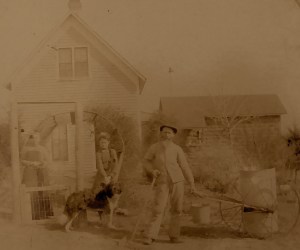
My father was an impossible being, a man without a past, without a family, who sprang full grown into Christian Science as a successful businessman. That’s how he presented himself to the world.

He was formidable, tough and unforgiving. No one crossed him. If they did, he never ever forgave them. I felt suffocated by Christian Science, the religion of my father and his constant push to make money.

Unless I accepted his worldview, I was out. So at age twenty, I was cast out of the family by my father.

Why fiction? Because a different truth lies in stories where point of view is acknowledged – where readers can draw their own conclusions and think about what happened or might have happened.

Do you think fiction can reveal truths?

Do you think fiction can reveal more than non-fiction?


It began with a death

Welcome to family and fiction, my blog about the novel I’m writing about my father’s life, Tracking the Human: nobody’s a long time.

It began with a death. My mother. Death opens up old stories and new possibilities as well as family dissension and conflict. My mother died 1 March 2011, peacefully in her bed, on her sleeping porch, in her house in Kansas City, Missouri, USA.

I was with her. She opened her eyes, looked at me. I smiled and said I love you Mom, and she was gone.

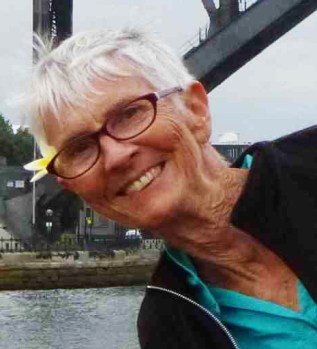
Notice the beaded bracelet she’s wearing that spells out KENYA.

After my mother’s death in Kansas City in 2011, I poked around in her attic to see what I could find. Her attic was a secret place, where people didn’t go – too hot in summer, too cold in winter, no insulation. The attic was only accessible through a pull-down ladder in the upstairs hall of her house.

Rummaging around in the attic, I found documents buried beneath keepsakes in a cedar chest. The documents I found started an off and on research project to learn more about my father’s life.

I had heard fleeting words from my mother that my father had been in prison for narcotics.

I went to the National Archives in Kansas City to see what I could find. At first nothing. BUT a document I found in my mother’s attic had listed aliases my father had used. Stephen Spence, an archivist tried to help me trace down my father through the aliases.

My father had been imprisoned at the Federal Penitentiary in Leavenworth Kansas, but there were no further records relating to his incarceration. Fort Leavenworth was divided into a military fort and a federal prison… establishing an annex which had to be used when there were thousands being picked up by the “war on drugs” in the 1930’s. Spence suggested he could have been in the Federal Penitentiary Annex and gave me contacts for further information.

I tried emails, letters, and phone calls to get more information about my father’s incarceration in the Federal Penitentiary, but it led nowhere. I returned to Nairobi, Kenya (where I was living at the time), and put aside looking for information about my father. The life I was living in Nairobi was more compelling. Let sleeping dogs lie, I thought to myself.

I did start a blog in memory of my mother, BetteHutchisonSilver@ wordpress.com

Nothing more happened for a few years. I just couldn’t face it. I had other priorities at the time. Something made me change my mind. Find out in the next post.

Thanks for reading my blog.  Your comments are always welcome!

Respect for Elders

I found a new title, or it found me during a poetry festival: Tracking the Human: nobody’s a long time.  Now back to writing a novel based on events in the life of my father, W. Lon Hutchison, from his birth in 1907 in Indian Territory, soon to become the state of Oklahoma, to his death in 1971 in Kansas City, Missouri.

Begin again… my father was a man with many secrets. The legacy of secrecy and revenge goes back to past generations and forward to current and emerging generations.

Where I live in Canberra Australia, every public event begins with respect for elders, (referring to Indigenous peoples in Australia ). We recognize that we are standing on Ngunnawal land and extend our respect to their elders, past present and emerging . Respect for elders is fundamental to the Aboriginal cultures of Australia, extending back at least 65,000 years.

Growing up, I was not able to respect my elders. How is respect established? What about transparency as is often heralded in the shady, sloppy world of politicians? There was no transparency in our family. Not by parents or children. On all sides, hiding and /or lies. My father was hiding his past. My mother was whingeing about lack of love from her mother and disgust for her stepfather. My father said nothing at all about his birth family, even when his sister moved to Kansas City, Missouri and became friends with my mom.

My father was a self-made businessman, although there is really no such thing as self-made… who can make themselves? Impossible. My father’s religion, Christian Science, was about individual discipline. According to Christian Science, There is no life, truth, nor intelligence in matter. All is infinite mind and its infinite manifestation. As a Christian Scientist, a person lives in their mind and the body will follow.

Through fiction I will build respect for my elders, reconcile my family and develop forgiveness. In this blog I will share my search for reconciliation.

Growing up, did you respect your elders? Was that built in to your culture? Did your parents share family stories with you?


My birth day

Because today is my birthday (19 February), I am sharing an excerpt from Tracking the Human, the novel I am writing based on events in the life of my father, W. Lon Hutchison. The excerpt is based on stories I was told about my birth.

• • • • • • • • • • • • • • • • • •

When Sally Jo went into labor, her husband drove her to Research Hospital. Dr. Keiger told her the baby was presenting the bottom instead of the head for delivery. He kept trying to turn the baby around, but the baby kept on presenting its rear end. Finally he told Sally Jo he would have to deliver the baby using forceps. She was terrified. She had seen a baby delivered by forceps the day before who was severely bruised about the head. What would happen to her baby?

When Sally was handed the newborn baby girl, she kept her eyes tight shut, afraid to look. What if her baby was bruised or deformed in some way? Sally Jo was fearful about the whole procedure. The nurse who handed her the baby, told her to open her eyes and look at her baby girl. She was not sure she wanted this baby, but here she was. She opened her eyes slowly, and looked at the wrinkly red-faced baby with straight black hair. Sally Jo had never held a newborn and didn’t know what to expect. The baby was kind of funny looking but she couldn’t detect any bruises or deformity. She was disappointed that it was a girl but glad that it wasn’t deformed.

Uninvited, Sally Jo’s mother showed up at the hospital to see her granddaughter. One of the neighbors must have told her about the baby. All the newborns were kept lined up in cribs that looked like clear plastic boxes. No one, not even the mother, was allowed to hold them. The nurses did everything. They made sure everything was clean and sanitary. They didn’t trust the new mothers to know what to do. Relatives stood outside the nursery peering through the glass partition at the babies in their boxlike cribs in the nursery.

One woman looking at the babies in their lined-up cribs commented,

Look at that big boy in the back row.

Sally Jo’s mother turned around, glared at the woman and said,

That big boy yer talkin’ about? That’s my granddaughter.

Then she left the hospital without going to see her daughter.


Poetry finds the way

Although I had to ditch Life Expectancy, the title I had chosen for the novel about my father because it was the title of a book by best-selling author Dean Koontz, I did find a title for my blog: Family and Fiction

For the blog, I decided not to use the title of the book. The blog is about the book and more… about investigation, research, reading, writing, rewriting, soul searching, self-doubt related to the book and beyond.

Discouraged about not finding a title for the book, I put it aside. Better not to think about it. Concentrate on issues at hand – an open house party for a visitor from Venezuela, helping my older son and his spouse to move from Nairobi, Kenya to Canberra, Australia, activism on climate change and for human rights for asylum seekers.

The book and the title were shoved out of sight, out of mind. Neglected, yet festering in the background, telling myself I should do it. I should continue. It had to be done. But I ignored those interior voices and kept myself busy with everyday life.

Until…Poetry finds the way.

I attended a panel at the poetry festival, Poetry on the Move, in Canberra. I brought with me a blank journal with illustrations by Ebenezer Edward Gostelow (1866-1944) that I had purchased at the National Library of Australia. I’m a sucker for buying beautiful journals as gifts. But not for myself. Easy to write on the computer when you can change it anytime but in a journal? More thought and better handwriting required.

A side journey:

Ebenezer Edward Gostelow was born in Sydney Australia in 1866. From 1889 he taught in country schools across New South Wales. As a self -taught artist and lover of Australia flora, he livened up blackboards in his classroom with captivating chalk drawings of flowers.
My journal is livened up with a drawing of a banksia on the front cover (photo) And on the inside with 10 full-page color illustrations as well as small sketches of flowering plants that pop up when least expected.

Back to the poetry festival: 

While waiting for the poets to begin a panel discussion, I sat down in the front row and read previous entries in my Australian flora decorated journal. I found quotes copied from books I had been reading, including Land Fall, a poem by Clive James and several quotes from Tim Winton, Island Home. Then a quote from a poem by Gary Snyder, Rip Rap and Cold Mountain Poems:

“Tracking the human future of intelligence and despair.”

That was it. One sentence that says what I’m trying to do in the book I’m writing.

The title found me: Tracking the Human, with a subtitle from a poem by Kenneth Patchen, Nobody’s a long time.

                         I’m on the road again… to writing, blogging, publishing….

How did you find the title for your book, short story or poem?

Your comments are welcome.  Thank you!


                               I’m on the road again… to writing, blogging, publishing….


Word Count: 456

Keywords: Poetry, Poetry on the Move, Canberra, Ebenezer Edward Gostelow, National Library of Australia, Banksia, Australian flora, Clive James, Tim Winton, Gary Snyder, Kenneth Patchen, Tracking the Human, Nobody’s a long time, title

Why blog?

Is it to write away sorrow and share joys?

Is it a living memoir?

Is it only for yourself? And maybe a few friends?

Is it to encourage people to continue their own writing or start writing?

Is it to exchange ideas and encourage other writers?

Is it to encourage people to buy and read my book, Tracking the Human: nobody’s a long time when it’s published.

All of the above

Here are some of the people I hope will read my blog and share their comments with me.

  • People who like to read, who learn through reading,
  • People who use the public library regularly.
  • People who are curious about other peoples’ lives and families.
  • People interested in the early to mid twentieth century in the mid West of the United States.
  • People interested in riding the rails, hobo culture, mental hospitals, and Christian Science.
  • People who are writers and write in order to know the world and themselves.

Here are some interesting people that might read my blog:

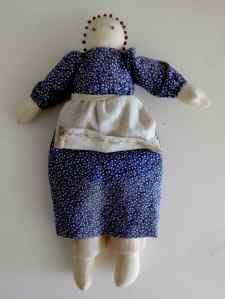
All of the above people were found on a shelf in our front bedroom. All are from an extensive collection of dolls that I inherited from my mother. Everywhere she went, my mother bought a handmade doll.

This person is particularly special:

Can you read what it says at the bottom of her apron?

Rebecca, who longs to travel. 

Rebecca would be my ideal reader… a person who longs to travel, who is curious, who wants to meet new people and exchange ideas.

Welcome to all those Rebeccas (and Robertos) out there.

Enjoy reading family and fiction.

Why do you blog?

Send in your comments.

Thanks!


A Giant Step Back

natl-mus-pamela-mirror-848

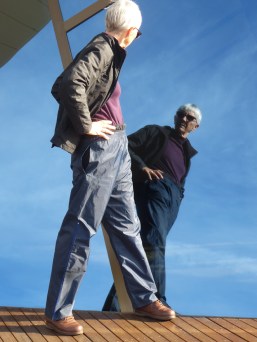
Here it is and here I am. Or am I? I thought I knew who I am as much as anyone can. Yet I finally understood that to know myself I must go back, not through ancestry.com to construct a family tree, but just one giant step back – to my father.

I never knew the man. Not really anyway. I didn’t want to know him while he was alive. I wanted to escape. I was already halfway out the door when he rejected me. I wanted a life that was not confined to making money in Kansas City Missouri USA where I grew up. I felt stunted by the environment – the limited ways of thinking of the time and place.

Post World War II, many families like ours were rising up and out of poverty and the working class into the middle class even into upper middle class affluence. At what cost? Who was paying for this? Who benefited and who did not?

This blog is about taking one step back and then jumping in to find my father. I am writing a novel, Tracking the Human: nobody’s a long time, based on events in his life.

Come with me as I try to learn about this man to write a fictional story that both is and is not his story.

Share with me your stories of research and writing for family reconciliation.   You can comment here or email me at pamela@tucacas.info.

Thanks!
Continue reading “A Giant Step Back”